
July 27, 2026
Finding God in Your Past, Present and Future
There is a difference between living through an experience and understanding what that experience means.
Experiences do not interpret themselves. Something happens, and then we attach meaning to it. We survive a difficult season and conclude, I got myself through that. We experience success and think, I made the right decisions. We come through a battle and decide, I was strong enough. Or we experience something painful and quietly determine, God must have abandoned me.
The event happens first. Then an interpretation is attached to it. And whatever interpretation we accept begins to shape the way we see ourselves, the way we see God and what we believe is possible in our future.
This is why the encounter between Abram and Melchizedek matters so much. Abram had experienced an extraordinary victory, but he still needed heaven to tell him what had actually happened.
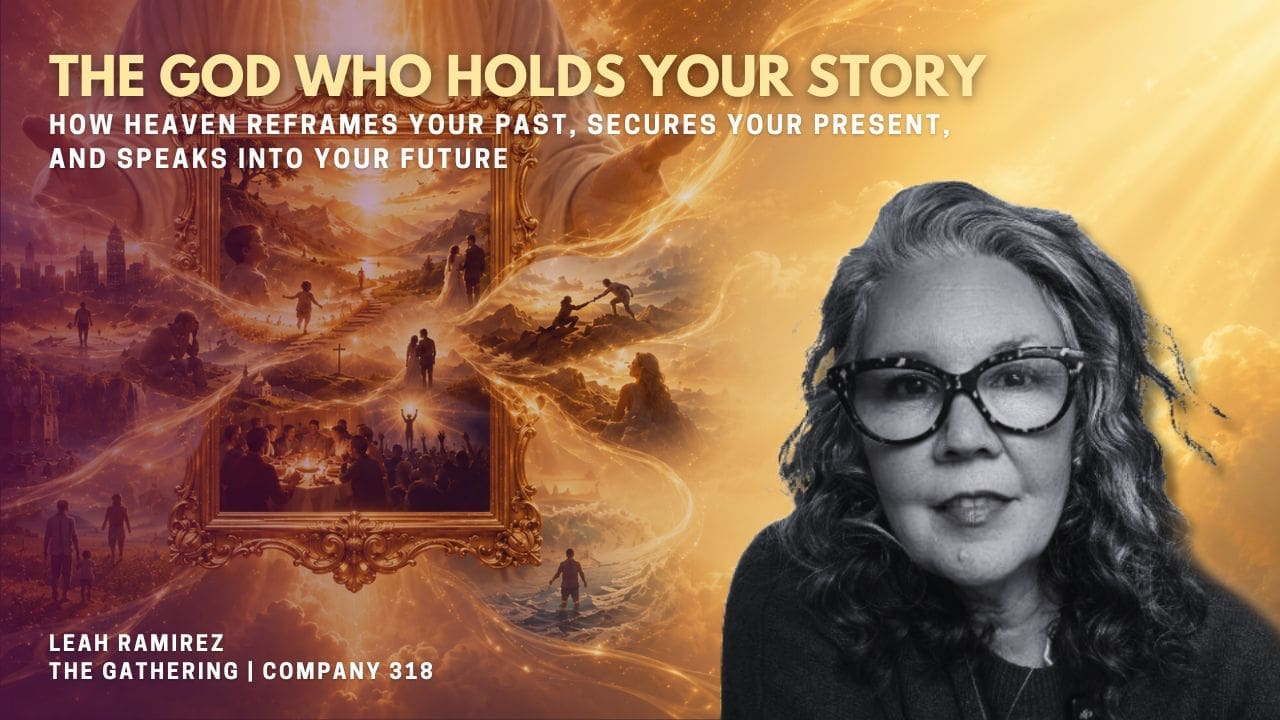
Watch The God Who Holds Your Story | Past, Present & Future here.
Abraham’s Faith Was Formed Over Time
When we read Abraham’s story, it is tempting to remember only the great moments of faith. God called Abram out of his country and promised to bless him. Abram believed God, and it was counted to him as righteousness. Abraham received the promised son and later laid that son upon the altar, believing that God would provide.
But there is much more to the story.
In Genesis 12, God calls Abram and promises him a future. Later in that same chapter, Abram encounters famine and responds in fear. In Genesis 13, Abram and Lot separate, and God restates the promise. In Genesis 14, Lot is taken captive, and Abram goes to war to rescue him. Abram then meets Melchizedek. In Genesis 15, Abram believes God. In Genesis 16, Abram and Sarai attempt to produce the promise through Hagar. In Genesis 17, Abram is renamed Abraham. In Genesis 21, Isaac is finally born.
That is a whole journey.
God calls Abram. God promises him a future. And then God spends years convincing Abraham that He is actually able to bring that future to pass.
Abraham’s faith is not formed in one encounter. It is formed through a lifetime of God continually revealing Himself. The point is not merely getting Abraham to the promised destination. The point is Abraham coming to know and trust the God who made the promise.
The Battle Was Over, but Its Meaning Was Still Being Determined
Genesis 14 tells us that Lot was taken captive by a coalition of kings. When Abram heard that his family had been taken, he gathered the 318 men trained in his household and went after them.
Abram was not leading a conventional army. He was a man living in tents, carrying a promise from God. Yet he was unwilling to leave Lot in captivity. He divided his forces by night, defeated the kings and brought everyone back—the people, the women, Lot and all the possessions that had been taken.
It was an astonishing victory.
Abram knew what he had done. He knew he had trained the men, formed a strategy, gone into battle and risked his life. He knew he had fought, and he knew he had won.
But Abram did not yet fully understand what had happened.
He had experienced the victory, but he still needed heaven to interpret the victory.
As Abram returned from the battle, Melchizedek, king of Salem and priest of God Most High, came to meet him carrying bread and wine. He blessed Abram and declared:
“Blessed be Abram by God Most High,
Possessor of heaven and earth;
and blessed be God Most High,
who has delivered your enemies into your hand!”
—Genesis 14:19–20
Melchizedek did not simply congratulate Abram for a battle well fought. He interpreted Abram’s story.
Abram may have been able to say, “I gathered the men. I formed the strategy. I went out by night. I defeated the kings.” All of that was true. Abram really did participate in the victory.
But Melchizedek revealed the truth underneath the truth: God Most High delivered Abram’s enemies into his hand.
Abram was there, but God was there too. Abram fought the battle, but God gave the victory. Abram participated in what happened, but Abram was not the source of what happened.
There was more taking place in Abram’s story than Abram had been able to see.
Who Gets to Interpret Your Story?
This is the question the encounter places before us: Who gets to interpret your story?
Who has been telling you what your victories mean? Who has been telling you what your failures mean? Who has been determining the meaning of your pain? Who has been defining what is possible in your future?
Some of us have interpreted our victories as evidence of our own strength. Others have interpreted painful seasons as evidence that God was absent. We can look back at a difficult chapter and see only our failure, our fear or what someone else did to us.
But Jesus, our true Priest-King, enters the story and says, “Let heaven tell you what happened.”
This does not diminish our participation. Abram really went to battle. He really acted courageously. He really risked his life for someone he loved. But the victory did not prove how independent Abram had become. It revealed how faithful God had been.
Abram was not a self-made man. He was a man being upheld by God Most High, Possessor of heaven and earth.
Before Abram fully understood who God was, God was already present in his story. Before Abram could name the One who was sustaining him, God was already working through his life.
How many places in our stories might look different if we allowed Jesus to interpret them?
Melchizedek’s Proclamation and the King of Sodom’s Offer
There were two kings standing before Abram in the valley.
Melchizedek came with a proclamation. The king of Sodom came with an offer.
Melchizedek told Abram who had given him the victory. The king of Sodom offered Abram the possessions that had been recovered in the battle.
The king of Sodom said:
“Give me the persons, but take the goods for yourself.”
—Genesis 14:21
Abram answered:
“I have lifted my hand to the Lord, God Most High, Possessor of heaven and earth, that I would not take a thread or a sandal strap or anything that is yours, lest you should say, ‘I have made Abram rich.’”
—Genesis 14:22–23
Notice Abram’s language.
Melchizedek had declared, “God Most High, Possessor of heaven and earth.” Now Abram says, “The Lord, God Most High, Possessor of heaven and earth.”
The proclamation of Melchizedek had become Abram’s confession. Melchizedek declared it, Abram heard it, and now Abram was speaking from it.
The revelation was already changing him. And the first evidence of that transformation was not that Abram received something. It was that Abram became able to refuse something.
Abram refused to allow the king of Sodom to write the story of his future. He would not allow Sodom to become the explanation for his blessing. He would not permit the king of Sodom to say, “I made Abram rich.”
Abram was not only refusing possessions. He was refusing an interpretation.
He had just been introduced to the Possessor of heaven and earth. If God possessed heaven and earth, Abram did not need Sodom to secure his future.
This is what revelation does. Revelation changes what we are able to refuse.
When we do not know our Source, every offer feels necessary. Every opportunity looks as though it must be taken. Every open door feels as though it must be God. We are afraid that if we say no, there will never be another provision.
But when we know the One who possesses heaven and earth, we no longer have to grasp at everything that is offered to us.
Sodom will not be our source. Sodom will not own our testimony. Sodom will not have the right to interpret our future.
God Was There, God Is Here, and God Holds the Future
Genesis 15 begins with a significant phrase:
“After these things the word of the Lord came to Abram in a vision: ‘Fear not, Abram, I am your shield; your reward shall be very great.’”
—Genesis 15:1
After what things?
After the battle. After the victory. After Melchizedek’s proclamation. After Abram received the bread and wine. After Abram confessed the name of God Most High. After Abram refused the king of Sodom’s offer.
After these things, God spoke.
Abram had just defeated a coalition of powerful kings. It would have been reasonable for him to wonder whether those kings might regroup and retaliate. The battle was over, but Abram was now back in his tents with his household, potentially exposed and vulnerable.
God did not tell Abram, “I will give you a shield.”
He said, “I am your shield.”
The God who was behind Abram in the battle was now surrounding Abram after the battle. The God who delivered the kings into his hand had not disappeared now that the victory was over.
God was saying, “I was with you then, and I am with you now. You are not unguarded.”
Then God said, “Your reward shall be very great.”
Abram had just refused the visible reward offered by Sodom. Now God spoke concerning Abram’s future reward. Abram had not endangered his future by refusing the wrong source. He had not lost anything by refusing to let Sodom own his testimony.
Melchizedek reframed Abram’s past: God Most High gave you the victory.
God secured Abram’s present: I am your shield.
God spoke over Abram’s future: Your reward shall be very great.
God was there.
God is here.
God will remain faithful.
The God who was faithful behind Abram in the battle would be faithful ahead of him in the promise.
What About the Promise?
Abram immediately brought God the deepest unresolved question in his life:
“O Lord God, what will You give me, for I continue childless?”
—Genesis 15:2
Abram was not primarily thinking about money. He was thinking about the promise.
God had told him, “I will make of you a great nation,” but Abram still had no son. Years had passed. Abram had land, possessions, servants and even military victory, but he did not yet have the one thing through which the promise was supposed to continue.
When God said, “Your reward shall be very great,” Abram essentially asked, “But what about the promise? What about what You said? What about the future You showed me?”
God brought him outside and told him to look toward heaven and number the stars, if he was able to number them.
“So shall your offspring be.”
And Abram believed God.
Faith for Abram’s future began to rise as he recognized the faithfulness that had already been present in his story. The God who gave the victory could fulfill the promise. The God who delivered the kings could give the son. The God who protected Abram in the battle could protect the future He had spoken.
God was faithful.
God is faithful.
God will be faithful.
The Revelation of Jesus Reframes Our Identity
There is a similar movement in Matthew 16 when Jesus takes His disciples to Caesarea Philippi.
The region was associated with pagan worship, spiritual darkness and what was understood by many as an entrance to the realm of the dead. Jesus deliberately brought His disciples into that setting and asked:
“Who do people say that the Son of Man is?”
The disciples repeated the interpretations circulating among the people. Some said John the Baptist. Others said Elijah, Jeremiah or one of the prophets.
Then Jesus made the question personal:
“But who do you say that I am?”
Simon answered:
“You are the Christ, the Son of the living God.”
Jesus responded:
“Blessed are you, Simon Bar-Jonah! For flesh and blood has not revealed this to you, but My Father who is in heaven.”
The Father revealed the Son, and Peter confessed what heaven had revealed.
Then, within that revelation of Christ, Jesus spoke to Peter’s identity:
“And I tell you, you are Peter.”
Peter did not rename himself. He did not construct an identity or decide who he wanted to become. Jesus named Peter from within the revelation of Himself.
Peter said, “You are the Christ.”
Jesus answered, “You are Peter.”
The revelation of who Jesus is opens the revelation of who we are. We do not find our true identity by looking more deeply into ourselves. We discover who we are as we behold Him rightly.
Jesus then spoke concerning the future:
“On this rock I will build My church, and the gates of Hades shall not prevail against it.”
Abram’s future would not be defined by the king of Sodom. Peter’s future—and the future of the Church—would not be defined by the gates of Hades.
The king of Sodom does not own the promise.
The gates of hell do not own the Church.
God does.
Let Jesus Reframe the Whole Story
The question is not only, “What happened to you?”
The deeper question is, “Who has been interpreting what happened to you?”
Abram could have allowed the battle to become a testimony to his own strength. He could have allowed the king of Sodom to become the source of his future. But Melchizedek stood in the valley and declared that God Most High had been present in the battle.
God was faithful in Abram’s past.
Then God came to Abram and said, “I am your shield.”
God was present with Abram in that moment.
Then God declared, “Your reward shall be very great.”
God held Abram’s future.
Your past is not waiting for Sodom to interpret it. Your present is not unguarded. Your future is not owned by the gates of hell.
Jesus Christ, our High Priest in the order of Melchizedek, has come to interpret the whole story. He comes to us not with an offer designed to own us, but with the bread and wine of His own finished work.
There may be places in your past where you still carry shame. There may be anxiety surrounding your future. You may be struggling to rest in your present.
Come again to the Table.
Give Jesus permission to enter even the lowest and most painful places of your story. Let Him change how you see your victories and your failures. Let Him reveal where His grace has been present all along.
The gospel is good news for your past, your present and your future.
God was there. God is here. God will be faithful.
Watch the Full Message
Watch The God Who Holds Your Story | Past, Present & Future — Leah Ramirez:
Join Us Sunday Morning
The Gathering meets every Sunday at 10:00 a.m.
720 Elkton Drive
Colorado Springs, CO 80907
Stay Connected
For additional teachings, reflections and conversations from Leah Ramirez, Chris Berglund and the Company 318 community, subscribe on Substack.
Partner With The Gathering
Your generosity helps us continue building a Christ-centered community in Colorado Springs and sharing these teachings with people around the world.
The God Who Holds Your Story
Leave a Reply Cancel reply

THE GATHERING
A local church and teaching community in Colorado Springs.
Sundays at 10:00 a.m.
720 Elkton Dr.
Colorado Springs, CO 80907
EXPLORE
LIFE TOGETHER
WIDER COMMUNITY
SUPPORT & CONTACT
About The Gathering
Leah Ramirez
Chris Berglund
Teaching
Reflections / Blog
Devotionals
Small Groups
Beholding and Prayer
The Grove
Planted Youth
Company 318
Behold School
Latest Teaching
YouTube
Facebook
Give
Contact Us
info@the-gathering.us
407-340-0204
@ 2026 The Gathering
What We Believe
Waic Up Call - Y.A.
The Vine - Kids